Author: Dr. Guan Yue

“Civil Litigation” or “Criminal Reporting”?

In Indonesia, civil litigation and criminal reporting are two main avenues for resolving legal disputes. Although both are integral parts of the judicial system, they exhibit distinct differences and applicability in practice. This article will explore a comparison between using civil litigation and criminal reporting to resolve legal disputes in Indonesia, including their procedures, purposes, and impacts.

Civil Litigation

Civil litigation refers to disputes between individuals or entities involving contracts, property rights, damages claims, and the like. In Indonesia, civil litigation procedures are relatively formal, typically requiring parties to engage lawyers to represent them. The following are the general procedures of civil litigation:

  1. Filing of Lawsuit: The plaintiff submits a complaint to the court, stating their claims and factual basis.
  2. Defense: The defendant submits a defense within the specified period, stating their position and defense reasons.
  3. Exchange of Evidence: Both parties exchange evidence and present witness testimonies in court to support their claims.
  4. Trial: The court conducts a trial, hearing arguments, evidence, and debates from both parties, and eventually renders a judgment.

Criminal Reporting

Criminal reporting involves actions that violate criminal law such as theft, assault, fraud, and so forth. In Indonesia, the process of criminal reporting is led by the police and prosecutors, typically without direct involvement of the victim but represented by public institutions. The following are the general procedures of criminal reporting:

  1. Filing a Report: The victim reports the incident to the police, providing relevant evidence and testimonies.
  2. Investigation: The police conduct an investigation, gather evidence, and take necessary actions such as arresting suspects.
  3. Prosecution: Based on the investigation results, the prosecutor decides whether to prosecute the suspect in court or not.
  4. Trial: The court holds a trial, hears evidence and arguments from both parties, and eventually makes a judgment.

Comparative Analysis

  1. Purpose: Civil litigation aims to restore the rights of the victim and compensate for losses through economic compensation or other civil remedies. On the other hand, criminal reporting aims to punish criminal behavior, maintain social order, and public interests.
  2. Evidence Standard: In civil litigation, the evidence standard is usually “balance of probabilities,” where the decision is based on the credibility of evidence. Whereas in criminal reporting, the evidence standard requires evidence to be conclusive, beyond reasonable doubt, proving the defendant’s guilt.
  3. Parties Involved: Civil litigation involves private disputes between parties, requiring active participation and self-bearing of litigation costs from the disputing parties. Conversely, criminal reporting is handled by public institutions such as the police and prosecutors, with minimal involvement from the victim.
  4. Impact of Judgments: Judgments in civil litigation typically result in economic compensation or injunctions, without involving the restriction of the defendant’s freedom. Whereas judgments in criminal reporting may lead to the defendant being convicted and facing imprisonment, fines, or other penalties.

Conclusion

Civil litigation and criminal reporting are two common ways to resolve legal disputes in Indonesia, each with different procedures, purposes, and impacts. The choice between the two depends on specific circumstances such as the nature of the dispute, the extent of harm, and the willingness of the disputing parties. Regardless of the chosen method, Indonesia’s judicial institutions are committed to resolving legal disputes fairly and effectively, to uphold the rights of citizens and maintain social order.

Indonesian Queen Law Firm Team Visits China, Paving the Way for New Chapter in Sino-Indonesian Legal Cooperation

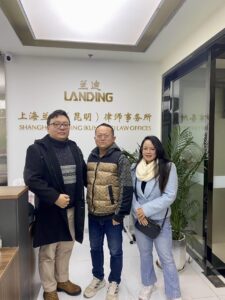
In recent days, two distinguished lawyers from the Indonesian Queen Law Firm, Dr. Guan Yue and Eni Oktaviani, embarked on a crucial legal mission to Kunming, China. Simultaneously, they held a fruitful meeting with Lawyer Lin Yi from Shanghai Landing (Kunming) Law Firm.

Dr. Guan Yue expressed, “This journey is not only about handling cases but also strengthening legal cooperation between China and Indonesia. Our discussions with Lawyer Lin Yi will provide valuable legal insights, enhancing our ability to achieve better outcomes in case resolutions.”

Eni Oktaviani added, “Kunming is a vibrant city, and we look forward to gaining a deep understanding of China’s legal environment. Through collaboration with Lawyer Lin Yi, we aim to uncover legal solutions together.”

During the meeting with Lawyer Lin Yi from Shanghai Landing (Kunming) Law Firm, both parties delved into their respective legal systems, case experiences, and potential collaboration opportunities. This collaboration not only holds the promise of providing additional legal support for the ongoing cases but also solidifies a stronger bridge for legal cooperation between China and Indonesia.

This initiative of handling cases in China underscores the proactive role of the Indonesian Queen Law Firm on the international legal stage, injecting new vitality into Sino-Indonesian legal cooperation. Anticipating that both sides will jointly drive innovation and development in legal affairs through future collaborations.

Members of Queen Law Firm Head to North Maluku Province to Handle Major Cases

Today, a team from Queen Law Firm headed to the Nickel Mining and Industrial Park in Central Halmahera, North Maluku, Indonesia – the Indonesia Weda Bay Industrial Park (IWIP), to provide legal assistance in several significant cases. As one of the leading legal teams in Indonesia, they will strive to resolve the legal challenges currently facing the region.

Queen Law Firm is a prominent law firm in Indonesia known for its professional legal services and client commitment. In this assignment, they will deal with various types of cases, including debt disputes, land disputes, and labor rights. This action reaffirms Queen Law Firm’s commitment to providing legal support throughout Indonesia.

North Maluku province is an important industrial area in Indonesia, with its nickel mining resources attracting global attention. However, with the rapid development of industry in the region, several legal challenges have emerged, including those related to debt, land use, and labor rights. The arrival of Queen Law Firm brings hope to the region while reminding the industry of the importance of legal compliance.

Members of Queen Law Firm will collaborate with relevant government departments and companies at the Weda Bay Industrial Park, working to resolve current legal disputes and promote the development of a sustainable legal framework in the area.

Eni Oktaviani, SH., MH., CLA., a lawyer from Queen Law Firm, stated that they will actively collaborate with judicial institutions and the local community, striving to find solutions, ensure the implementation of fair judicial procedures, and create a fair and secure legal environment for all parties involved. This action will further strengthen Queen Law Firm’s position in the Indonesian legal community while providing valuable experience for similar challenges in the future.

The Multidimensional Perspective of Justice: Pursuing the Eternal Principles of Fairness

Justice, this abstract and far-reaching concept, runs through the history and progress of human society. From ancient times to the present, people have continuously explored the essence of justice, often getting entangled in debates between different ideologies and perspectives. Justice is not a singular concept; it is a multidimensional tapestry encompassing numerous layers of values and meanings. In this article, we will attempt to understand justice from different angles and explore the eternal principles of seeking fairness.

1. The Individual Dimension of Justice

At the individual level, justice involves respecting, equality, and dignity for each person. Everyone has the right to fair and equitable treatment, free from discrimination based on race, gender, religion, or social status. At this level, justice is closely connected to human rights, with people pursuing fundamental humanitarian values, hoping to attain respect and freedom within society.

2. The Social Dimension of Justice

At the social level, justice concerns the fairness and harmony of the entire society. Social justice demands rational distribution of resources, ensuring that every individual has equal opportunities to develop and realize their potential. Reducing wealth disparities, equitable distribution of education and healthcare resources, and efficient functioning of public services are all crucial to achieving social justice. Justice here is not only a moral demand but also the foundation of social stability and prosperity.

3. The Legal Dimension of Justice

Law is one of the significant manifestations of justice. Through law, society can punish unfair behaviors, safeguard citizens’ rights, and maintain social order. However, the law itself needs continuous examination and improvement to ensure its alignment with moral values. Justice requires the support of the law, and good laws should reflect the principles of justice rather than becoming tools of power.

4. The Global Dimension of Justice

With the development of globalization, the scope of justice has expanded to a global level. Global justice calls for cooperation and consensus across national borders, focusing on the development of impoverished regions, climate change and environmental protection, and humanitarian care for refugees and immigrants. At this level, countries need to transcend selfishness and work together to maximize the overall interests of humanity.

5. The Time Dimension of Justice

Justice also has a time dimension. Historical injustices and prejudices may need to be confronted, and historical reparations and truth investigations become a part of achieving justice. Meanwhile, present choices for justice inevitably influence the future. We need to create a more just and harmonious society for the next generation, which is both a responsibility and reward for the past and present.

6. The Multicultural Dimension of Justice

Justice is not universal; different cultures and traditions have different interpretations of justice. Respecting cultural diversity and understanding its unique contributions to justice are key to achieving global justice. Dialogue and inclusivity among cultures will help eliminate misunderstandings and biases and achieve a cross-cultural perspective of justice.

7. The Persevering Pursuit

Although justice is an ideal goal, it does not mean it is unattainable. The pursuit of justice is an enduring issue for humanity, requiring relentless efforts from every generation. In this process, we may never reach perfect justice, but our unwavering efforts will gradually bring us closer on the path of progress.

Conclusion

Justice is a complex concept, involving multiple layers of meanings and pursuits. In the dimensions of the individual, society, law, global, time, and culture, we strive for fairness, equality, respect, and harmony. Justice is not immutable; it should evolve and improve with the development of time. Only by persistently pursuing justice can we find a way to coexist more justly and beautifully in this diverse and intricate world.

Queen Law Firm Wins “INDONESIA BEST PERFORMANCING LAWYER WINNER 2023” Award

On May 12, 2023, Eni Oktaviani, SH., MH. and Dr. Guan Yue of Queen Law Firm received the “INDONESIA BEST PERFORMANCING LAWYER WINNER 2023” in an awards ceremony. This award recognizes their excellent performance in the legal field in Indonesia.

At the event, Eni Oktaviani, SH., MH. thanked the government agencies, colleagues, and clients for their support. She stated that the award is a recognition of the high-quality legal services provided by Queen Law Firm and its team to clients over the years. She said, “We are committed to providing the best solutions for our clients and working closely with them to understand their needs. This award belongs to everyone at Queen Law Firm.”

Dr. Guan Yue, in his acceptance speech, shared his understanding and passion for the legal profession. He said, “As lawyers, our job is to seek justice for those who need our help. This is the core of our profession. We must always consider issues from the client’s perspective and provide the best legal services to them. This is a path full of challenges and opportunities, but as long as we remain passionate and persistent, we will succeed.”

This award demonstrates the excellent performance and leadership of Eni Oktaviani and Dr. Guan Yue in the legal field and also recognizes Queen Law Firm’s leadership position in the legal industry in Indonesia. Their successful experience will inspire more young lawyers to move forward in professionalism and serving clients, and make greater contributions to the legal profession in Indonesia.

Dr. Guan from Queen Law Firm was Interviewed by Johns Hopkins University

On March 22, 2023, a research team from Johns Hopkins University interviewed Dr. Guan from the Queen Law Firm to discuss the issue of judicial efficiency in Indonesia.

In the interview, Dr. Guan pointed out some problems in the Indonesian judicial system, such as excessive delay in case processing, lack of transparency and predictability, and uneven professional level among judges. These problems have led to low efficiency and unfairness in the judicial process, negatively affecting Indonesia’s business and investment environment.

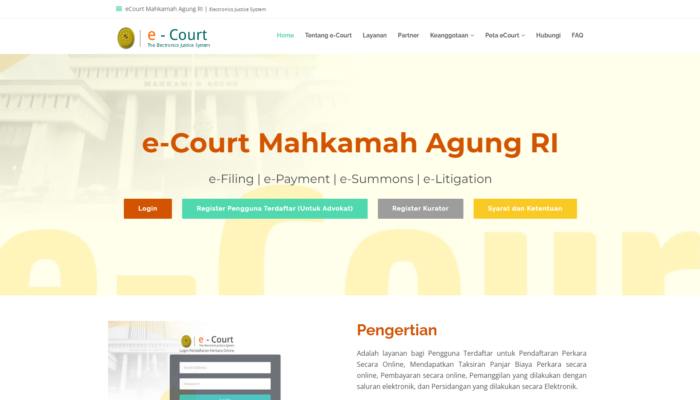
However, Dr. Guan also mentioned some positive changes. The Indonesian government has begun to take measures to improve judicial efficiency and fairness, such as implementing electronic litigation systems, strengthening training for judges and legal professionals, and establishing a more transparent and predictable judicial system. These measures are expected to promote the improvement of Indonesia’s legal environment and judicial image, enhance business confidence, and attract more foreign investment.

Dr. Guan also stated that although there are still many challenges in the Indonesian judicial system, he remains optimistic about the future and calls on the government, enterprises, and all sectors of society to work together to promote the reform and modernization of the Indonesian judicial system to achieve a more fair and efficient judicial process.

The Structure of The Legal Opinion (LO)

So far, Queen Law Firm has issued Legal Opinions for many companies around the world, including online games, mining, tourism, transportation, virtual currency, real estate development, international trade, medical equipment, company listing, new energy, high-speed rail, securities, etc. for many industries and uses. Today, Queen Law Firm would like to summarize the composition of a Legal Opinion, so enterprises and individuals interested in Legal Opinion can better understand the professionalism and importance of Legal Opinion.

A Legal Opinion is a professional legal document that gives detailed legal answers to one or more issues on the basis of studying existing laws and regulations. The role of Legal Opinion is very important. It can ensure that enterprises avoid possible legal risks when conducting certain commercial activities, and obtain the maximum profit at the minimum cost within the scope permitted by law. Legal Opinions are generally divided into the following five parts:

  1. Legal Basis
    This part lists the current laws and regulations that will be used in the Legal Opinion. Because all opinions in the Legal Opinion will be given based on these laws and regulations.
  2. Chronology of Facts
    This part is a statement of some facts, such as the basic situation of the client, the legality of the documents and materials submitted by the client, and so on.
  3. Problem Identification
    This part will list the questions that the Legal Opinion will answer.
  4. Legal Opinion
    This part will provide legal professionals and detailed answers to the questions raised by the client in accordance with applicable laws and regulations, and give corresponding suggestions. In this part, there will be a rigorous legal logic system. By analyzing various legal articles related to the issue, the rationality and legality of the legal opinion will be determined. For individual types of Legal Opinions, there will also be case analysis, government policy research, etc.
  5. Conclusion
    In this part, the answers to the questions will be listed again in a summary manner, so that client can refer to them in later operations.

It can be seen that a good Legal Opinion has a rigorous system. Because a good Legal Opinion must be able to maximize the protection of the interests of the client. It can be said that a good Legal Opinion is the compass for the enterprise in the process of implementing the plan.

Requirements for Letter of No Objection to Marriage

Chinese citizens domiciled in Indonesia and Indonesian citizens have registered their marriage with the Indonesian population department. At the request of the Indonesian population department, Chinese nationals can apply for a “Letter of No Objection to Marriage”. To apply for a marriage certificate without objections, you will need to prepare the following materials:

  1. Original and copy of foreigner’s passport;
  2. Foreigners at the domestic notary office issue a “notarization of unmarried information” and to the Consular Department of the Ministry of Foreign Affairs or local foreign offices, Indonesian embassies and consulates in China to carry out “double certification”;
  3. Original and copy of Kitas Foreigner;
  4. Foreign companies working in Indonesia issue evidence that they work in Indonesia;
  5. Proof of entering a foreigner’s religion (depending on the religion of the Indonesian citizen);
  6. Original passport and copy of Indonesian passport;
  7. Original evidence from single letter of Indonesian citizen (civil registration/KUA);
  8. The original household registration card (KK) and a copy of the Indonesian citizen;
  9. Each is handwritten in one copy at the time of introduction and signed and dated (Contents: time, when and where to get acquainted, how to get acquainted, duration of communication between the two parties, language of communication between the two parties, whether you have met each other’s family members others, do you know each other’s family situation, whether the Indonesian citizen concerned has ever visited China, do you intend to stay in Indonesia after marriage, etc.);
  10. 3 photos together (better if you can attach a photo of the meeting with parents).

*Embassies and Consulates will not issue a “Letter of No Objection to Marriage” for Chinese nationals who come to Indonesia temporarily or for a short period of time.

*After the initial inspection, the Embassy may ask you to provide other relevant supporting materials according to your situation.

Electronic System Operator (PSE)

Recently, much news has appeared in the media regarding the Electronic System Operator (PSE) regulations that threaten several large companies such as Google, Facebook, Instagram, and others. The Ministry of Communication and Information (Kemenkominfo) threatened to block all companies that have not registered for the Private Scope Electronic System Operator (PSE) launched by Kominfo.

Before we discuss further PSE, it’s good that we first know what PSE is. According to the official website of the Ministry of Communication and Information, Electronic System Operator (PSE) is every person, state administrator, business entity, and community that provides manages, and/or operates an electronic system individually or jointly to users of electronic systems for their own needs and/or needs of other parties.

Then who should register the PSE? According to the Regulation of the Minister of Communication and Information Number 5 of 2020, those who are obliged to register PSE are Portals, sites, or applications on the network via the internet that are used to:

  1. Provide, manage, and/or operate the offer and/or trade of goods and/or services;
  2. Provide, manage, and/or operate financial transaction services;
  3. Delivery of paid digital materials or content through the data network either by way of downloading through portals or websites, send by electronic mail, or through other applications to the user’s device;
  4. Provide, manage, and/or operate communication services including but not limited to short messages, voice calls, video calls, electronic mail, and online conversations in the form of digital platforms, network services, and social media;
  5. Search engine services, Electronic Information provision services in the form of writing, sound, images, animations, music, videos, films, and games or a combination of some and/or all of them; and/or
  6. Personal data processing for operational activities to serve the public related to Electronic Transaction activities.

The obligation to register the Private Scope PSE must be carried out before the Electronic System begins to be used by Electronic System Users.

The Role and Function of Retainer

The term retainer may be foreign to most people, so there are still many people who question whether it is a retainer? The retainer is a legal relationship between a lawyer and his client where the legal relationship is continuous and continuous in general, the legal relationship is carried out for a minimum of one year, so it can be said that the Retainer is a Permanent Legal Counsel.

Basically, Retainers can be used by companies or individuals before a legal problem occurs or after a legal problem occurs, with the function of protecting the company so that legal problems do not occur.

The function of the retainer for the company is as a legal consultant who can handle litigation and non-litigation cases including:

Litigation

In litigation cases, the retainer can help the client represent, accompany and provide legal assistance as a plaintiff or defendant, petitioner or respondent, and as a witness in a civil case while in a criminal case the retainer can help a client represent, assist and provide legal assistance as a reporter or the reported, suspect or defendant in a legal case.

Non-litigation

In non-litigation cases, the retainer functions as a legal advisor who provides legal explanations and views in accordance with Indonesian law relating to companies.

The scope of the retainer in non-litigation includes making agreements, reviewing agreements, making legal opinions, legal drafting, legal audits, preparing GMS documents, and helping to take care of the required company permits.

In using retainer services in a legal matter, it is highly recommended for the client, because it has greater advantages than using the services of an ordinary lawyer. These advantages include reducing the cost of legal consultants and providing varied services that can help with litigation and non-litigation problems so that they are not fixed on one case and can even solve several cases at the same time.